
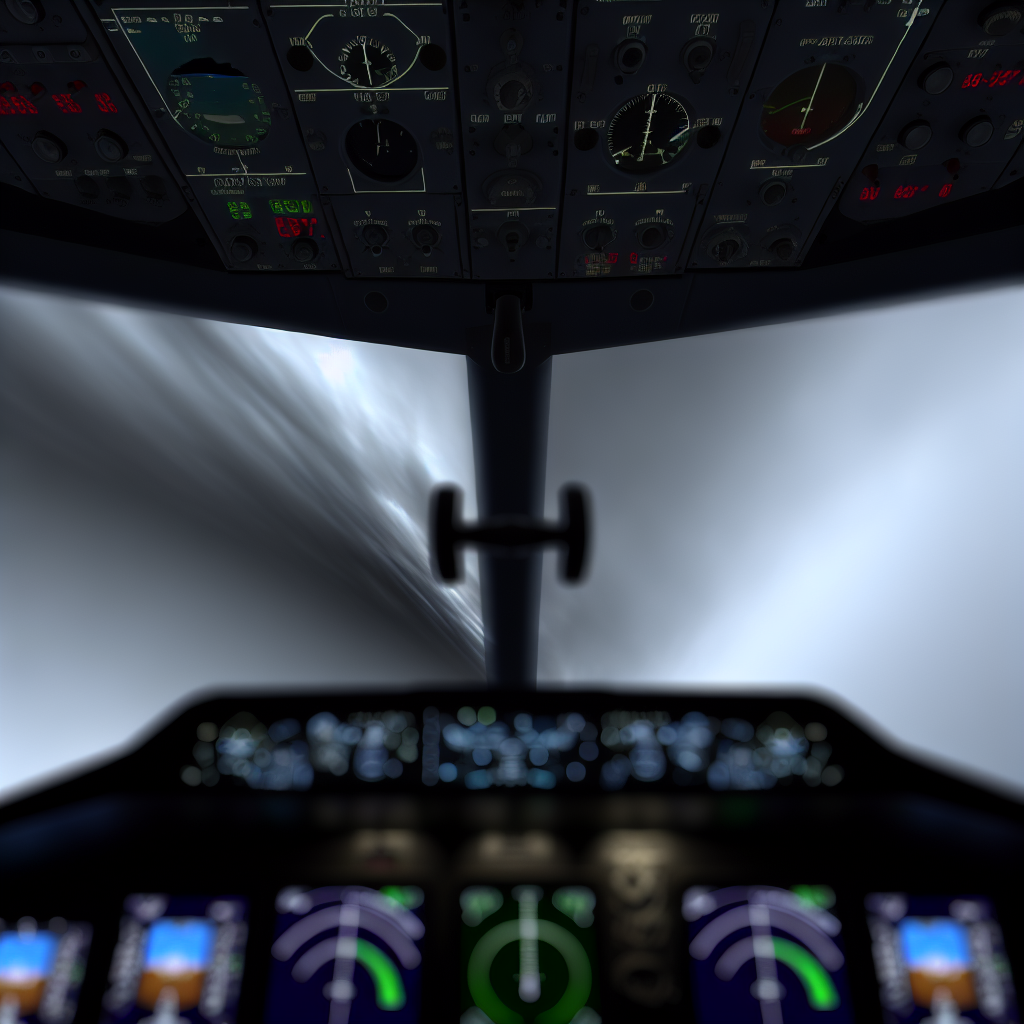
**🚨 Warning: The Silent Killer of Aviation 🔴⚠️**
Hey there, young aviation enthusiasts! 👋 Are you interested in flying or dreaming of becoming a pilot one day? 🛩️ Well, you might be surprised to learn that the deadliest threat to pilots is not turbulence, bad weather, or even other aircraft! It's something much more sneaky and hard to spot: spatial disorientation! 🕵️♀️
Spatial disorientation, also known as G-LOC (G-force induced Loss of Consciousness), is a condition that occurs when pilots lose their sense of orientation and balance in the air. It's a silent killer that can happen to even the most experienced pilots, and it's more common than you think! 🤯 It's estimated that G-LOC is responsible for up to 70% of all GA (General Aviation) accidents. Ouch! 😱
So, what exactly is spatial disorientation? Simple put, it's when a pilot becomes unsure of their plane's attitude and altitude, and their brain gets confused about what's up and what's down. It's like being in a funhouse mirror maze - you're not sure which way is up or down! 🌪️ This can happen even when flying in good weather, and it's not just for pilots! Spatial disorientation can also affect anyone who's using an aircraft, from student pilots to experienced flyers.
But why does it happen? Well, it's usually caused by G-forces, which can pressurize the body and make the brain feel wonky. G-forces can come from tight turns, steep climbs, or even just flying in a plane that's not very stable. 😬 It's also possible for pilots to get spatially disoriented when flying in clouds or at night when it's hard to see. Add to that the stress of flying in traffic, and you've got a perfect storm for spatial disorientation! ⛈️
So, what can pilots do to avoid G-LOC? Here are a few tips:
• Always check your instruments before flying - just because you can see the instrument panel doesn't mean it's reliable 📊
• Stay a step away from the controls while in turbulence and keep your hands firmly on the wheel or stick 😳
• Use your fellow pilots for support - if you're ever unsure or disoriented, ask for help! 👫
But what can we do as a community to help prevent G-LOC? We can all be mindful of flyers around us and make sure they feel supported. Encourage your fellow flyers to stay alert and focused. Make time for pre-flight checks. And, let's talk more about G-LOC so we can all learn how to recognize the signs! 🗣️
Now that you know more about spatial disorientation, it's time to take action! Educating yourself is the first step to staying safe in the skies.
**Learn more about G-LOC and how to prevent it:**
DISCLAIMER: The information provided on PilotsforPilots is for general informational purposes only. While we strive to offer accurate and up-to-date content, we make no warranties or representations regarding the accuracy, completeness, or reliability of any information. The content provided on this website is not a substitute for professional training, advice, or guidance from certified aviation experts. Users should always consult with certified aviation professionals, instructors, or regulatory bodies before making decisions related to flight operations, safety, or other aviation-related matters.
PilotsforPilots is not responsible for any actions taken based on the information provided on this site. Use of the website and its content is at your own risk.